

Dry chicken is the fastest way to ruin a healthy meal. One bite in, and suddenly your “clean eating” plan feels like a chore instead of a treat. The good news? Diet chicken does not have to be tough, chewy, or bland. With a few smart techniques, you can cook juicy, tender chicken every single time—without adding heavy sauces or unnecessary extras.
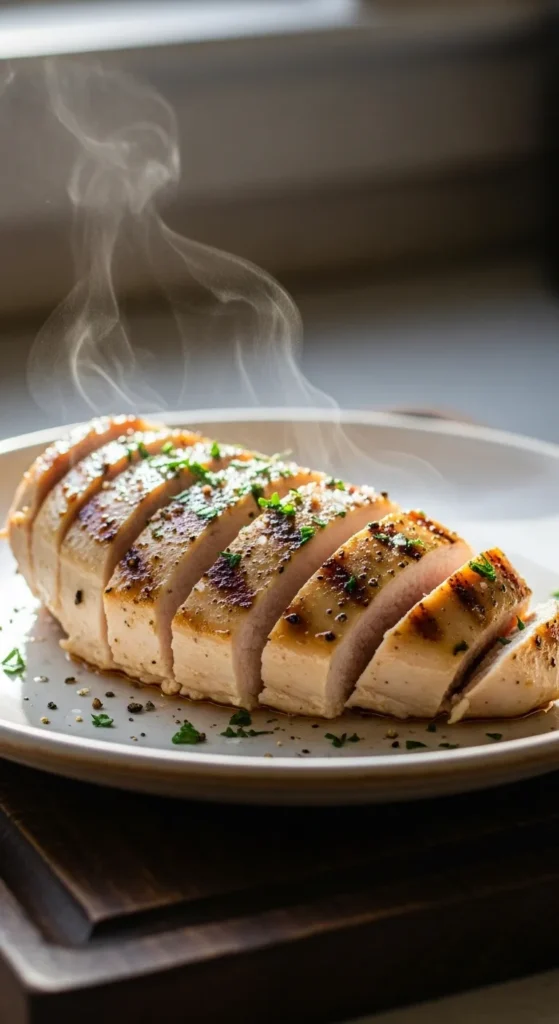
This guide walks you through practical, beginner-friendly methods that actually work. No complicated steps. No fancy tools. Just real results you’ll want to repeat.
Why Diet Chicken Turns Dry (and How to Stop It)
Most dry chicken problems come from overcooking or starting with chicken that isn’t prepped properly. Chicken breast is very lean, which means there’s little margin for error.
Common mistakes include:
- Cooking straight from the fridge
- Using high heat for too long
- Skipping seasoning until after cooking
- Cutting into chicken too early
The fix isn’t adding more oil—it’s learning how to protect moisture from start to finish.
Step 1: Choose the Right Cut and Prep It Properly
Boneless, skinless chicken breast is popular for diet meals, but it needs care. If you’re open to it, chicken thighs (skinless) stay naturally juicier and still fit many healthy plans.
Before cooking, always:
- Let chicken rest at room temperature for 10–15 minutes
- Pat it dry gently (don’t squeeze it)
- Season evenly on both sides
A simple seasoning mix works best:
- Salt
- Black pepper
- Garlic powder
- Paprika or dried herbs
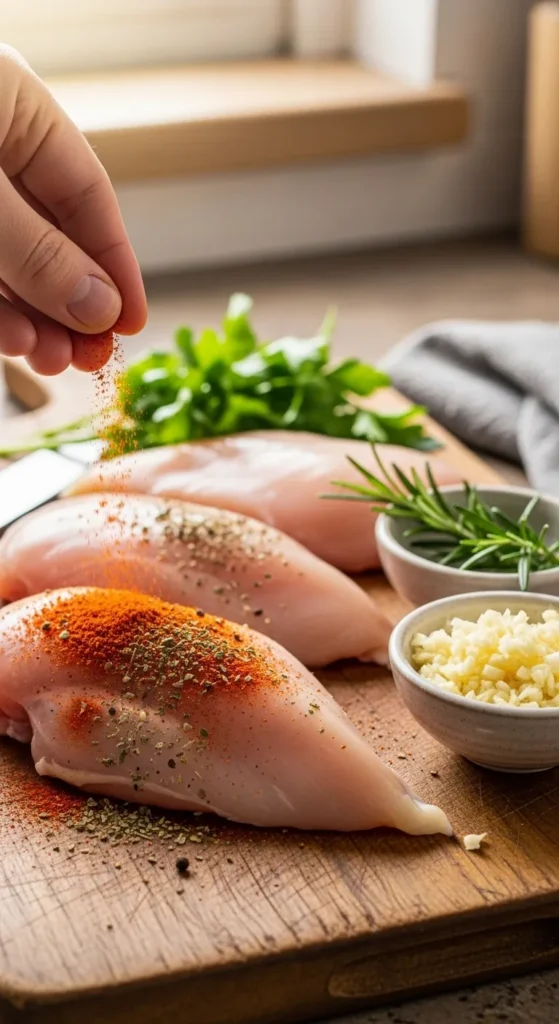
Seasoning early helps the meat retain moisture as it cooks.
Step 2: Use Moisture-Locking Cooking Methods
Not all cooking methods treat chicken the same. These techniques are your best friends for juicy results.
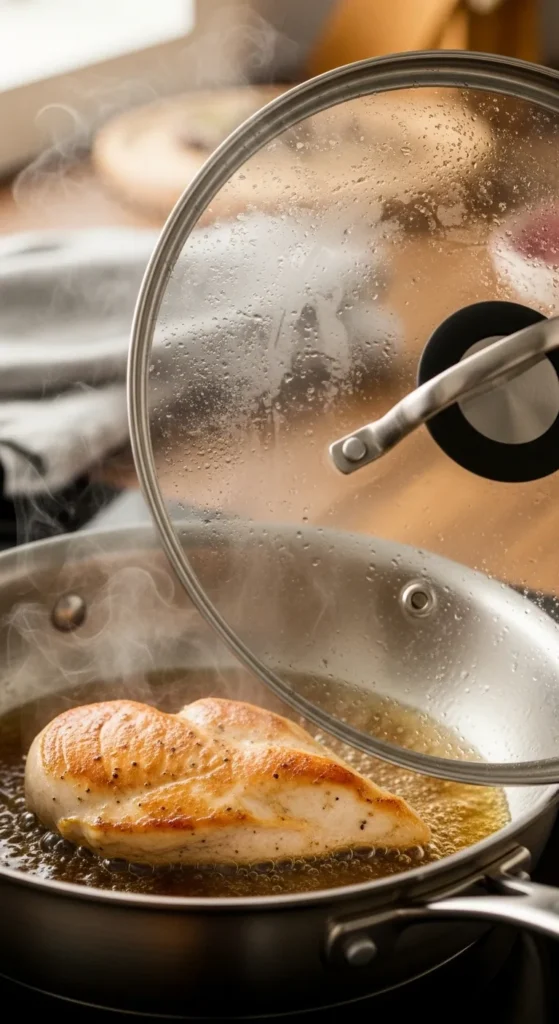
Pan-Seared + Covered
This method creates flavor while locking in moisture.
- Heat a nonstick or stainless pan over medium heat
- Add a small amount of oil
- Sear chicken 3–4 minutes per side
- Cover the pan and reduce heat for a few minutes
The steam finishes cooking gently instead of drying it out.
Oven Baking (The Right Way)
Baking works when temperature is controlled.
- Bake at 375°F (190°C)
- Place chicken in a baking dish with space between pieces
- Cover loosely with foil for the first half
- Uncover at the end for light browning
This prevents moisture from escaping too quickly.
Step 3: Don’t Skip the Internal Temperature Check
Guessing is the fastest path to dry chicken.
Chicken is perfectly cooked at 165°F (74°C). Pull it off the heat at 160°F and let it rest—the temperature will rise naturally.
If you don’t have a thermometer, look for:
- Clear juices
- Firm but springy texture
- No pink in the center
Overcooking “just to be safe” actually makes chicken worse.
Step 4: Let It Rest (Yes, It Matters)
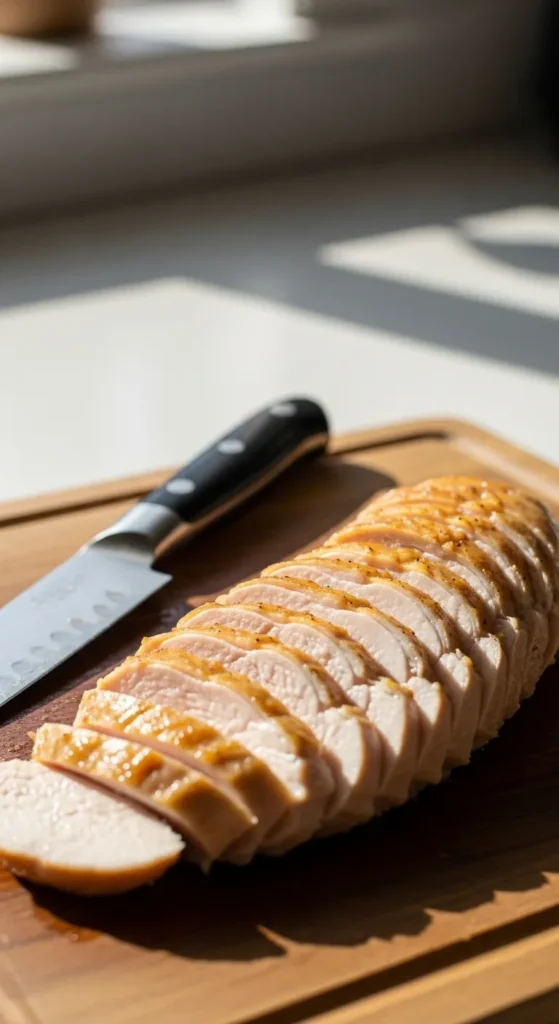
Cutting into chicken right away releases all the juices you worked so hard to keep.
Instead:
- Let chicken rest 5–7 minutes
- Cover loosely with foil
- Slice only after resting
This allows juices to redistribute evenly.
Step 5: Add Moisture Without Heavy Sauces
Diet chicken doesn’t need thick sauces to stay enjoyable. Light additions can boost flavor without weighing meals down.
Try:
- Fresh lemon juice squeezed after cooking
- Plain yogurt mixed with herbs as a topping
- Light broth drizzle
- Chopped tomatoes or cucumber salad
These add freshness and moisture without overpowering the dish.
Quick Flavor Combinations That Stay Juicy
Rotate flavors to avoid boredom:
- Garlic + herbs
- Lemon + black pepper
- Smoked paprika + onion powder
- Ginger powder + mild spices
Keeping things simple helps you stay consistent—and consistency matters more than perfection.
Final Takeaway
Juicy diet chicken isn’t about luck—it’s about method. Control heat, protect moisture, rest your chicken, and stop cooking by guesswork. Once you master these basics, healthy meals feel satisfying instead of restrictive.
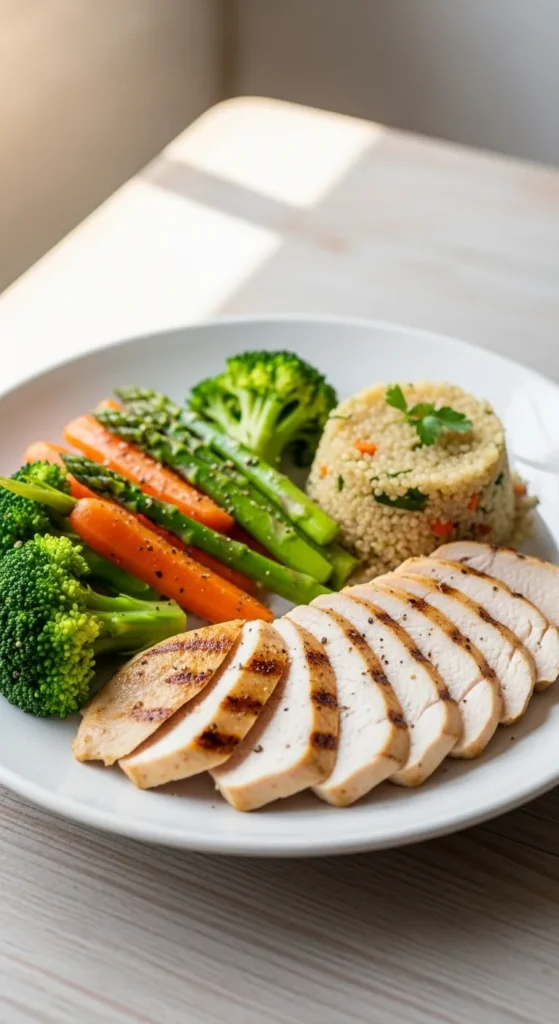
Save this guide, try one method this week, and taste the difference for yourself. Your future meals will thank you.

Leave a Reply